Why the Work You're Sitting On Might Be the Work the World Needs Most

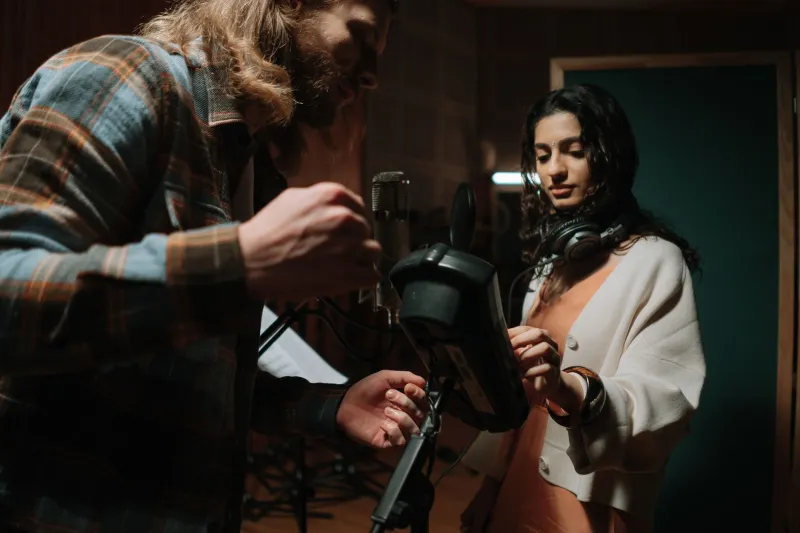
Photo: Pattaya Patrol from Pattaya, CC BY-SA 2.0, via Wikimedia Commons
Let me tell you about a piece I held back for almost fourteen months.
It was done. Genuinely done — the kind of done where you've revised every line, rehearsed every beat, second-guessed every choice until the choices stopped meaning anything. And still, every time I thought about putting it out there, something in my chest tightened and I found one more thing to tweak. One more reason to wait.
If you're a performer or a creative of any stripe, you probably know that feeling intimately. It's not laziness. It's not procrastination in the classic sense. It's something more specific and more stubborn — a gap between how you see your own work and how you imagine the world will receive it. That gap has a name, and learning to navigate it might be the single most important skill you develop as an artist.
The Internal Critic Is Running on a Different Scale
Here's the thing nobody really talks about when the conversation turns to imposter syndrome: the problem isn't that you think you're bad. Often, it's that your standards for yourself are operating on a completely different scale than the standards you'd apply to anyone else.
You watch a fellow performer take the stage with material that's rougher than yours, and you cheer for them. You see a friend release a project with visible seams, and you celebrate it genuinely. But when it comes to your own work? Suddenly the bar is somewhere in the stratosphere.
Psychologists call this the double standard of self-evaluation, and it's remarkably common among high-achieving creatives. The more you care about your craft, the more ruthless your internal editor becomes. That ruthlessness is an asset in the rehearsal room. On the release date, it becomes a liability.
Audiences — real, living, breathing audiences — are not sitting in the theater with a rubric. They're not comparing your performance to some Platonic ideal version of the piece. They're experiencing what's in front of them, and they're bringing their own lives and emotions to that experience. The gap you're agonizing over is largely invisible to them.
What Gets Lost When You Keep Waiting
There's a cost to the perpetual polish cycle that doesn't show up until later, and by then it's easy to miss the connection.
When you delay sharing work, you delay feedback. Real feedback — not the imagined criticism you've been rehearsing in your head, but the actual human response that tells you what's landing and what isn't. That feedback is how you grow. Sitting on a project doesn't protect it from imperfection; it just postpones your education.
Beyond the craft level, there's a visibility cost. Every creative career is, in part, a relationship built over time with an audience. That relationship requires consistent presence. The performer who shows up regularly — even imperfectly — builds something the perfectionist in permanent refinement mode never can: familiarity, trust, and a track record that compounds.
There's also something quieter and more personal at stake. When you hold back work indefinitely, you're sending yourself a message. You're reinforcing the belief that you're not ready, that the threshold for "good enough" is always just a little further ahead. That belief doesn't stay contained to one project. It bleeds into the next one, and the one after that.
The Visibility Fear Is Real, and It's Worth Naming
Let's not gloss over this part. Sometimes the delay isn't really about the work at all. It's about what happens when the work is out there — when it can be seen, judged, misunderstood, or ignored.
Visibility is vulnerable. Putting something you made into the world means people can have opinions about it, and some of those opinions will be wrong, and some will be unkind, and some will hit a nerve you didn't know you had. That's not a hypothetical fear. That's a real thing that happens.
But here's the reframe that actually helped me: the work sitting in your drawer is already being judged. By you. Constantly. And you're not being a fair judge. At least when it's out in the world, the judgment is varied and sometimes surprising and occasionally even generous in ways you never anticipated.
The audience that finds your work and connects with it — they can't do that if the work never reaches them.
Shifting from Perfectionism to Progress
This isn't a call to release sloppy work or skip the revision process. Craft matters. Standards matter. But there's a difference between standards that serve the work and standards that serve your fear.
A few mindset shifts that have genuinely moved the needle for me:
Set a release condition, not a perfection condition. Instead of asking "is this perfect?" ask "does this represent where I am right now, honestly and fully?" If the answer is yes, that's your green light.
Separate the piece from your identity. One project is not the final verdict on your worth as an artist. It's a data point. A moment in time. You're allowed to have made something that doesn't land perfectly, because the next thing you make will be informed by what you learned.
Borrow the generosity you give others. Think about how you'd respond if a peer showed you the thing you're currently sitting on. Would you tear it apart? Or would you see the effort, the intention, the skill — and encourage them to share it? Give yourself that same response.
Build a deadline that isn't negotiable. External accountability changes the equation. Tell someone the date you're releasing. Book the performance. Submit the application. Once the deadline is external, the internal critic loses some of its power.
The Drawer Doesn't Protect You
I finally released that piece I mentioned. Fourteen months after I first considered it ready. The response wasn't what I'd feared, and it also wasn't the standing ovation my most optimistic self had imagined. It was something better: it was real. People connected with specific parts of it. A few people reached out. The conversation it started was worth more than the protection of keeping it hidden ever was.
The confidence gap — that space between how you see your work and how ready you feel to share it — is probably never going to close completely. That's not a malfunction. That's what it feels like to care deeply about what you do.
But caring deeply and waiting indefinitely are not the same thing. At some point, the most generous thing you can do — for your audience, for your growth, and honestly for yourself — is to let the work go out into the world and do what it was made to do.
The drawer doesn't protect your work. It just keeps it from mattering.