What Getting Passed Over Actually Gave Me: The Unexpected Gift of Being Replaced

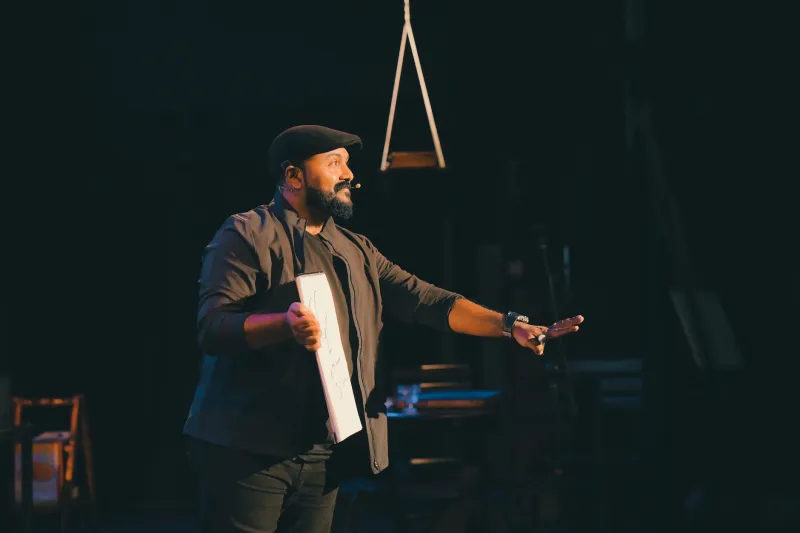
Photo: performer standing alone backstage theater spotlight, via images.stockcake.com
There's a specific kind of silence that follows a rejection — the one where you didn't just lose a role, you lost the version of yourself you thought you were becoming. The callback that went cold. The part you were sure was yours, right up until it wasn't. The moment you find out someone else got the gig, and you have to sit with that in a diner booth or a parking garage or wherever the universe decides to deliver the news.
We don't talk enough about what happens after that silence. Not the inspirational highlight reel version, but the real, uncomfortable stretch of time where you're figuring out what you're actually supposed to do next.
Because sometimes — not always, but more often than you'd expect — that's exactly where the most interesting work begins.
The Understudy Paradox
There's something almost poetic about the understudy role in theater. You know the material cold. You've done every rehearsal, absorbed every note, lived inside the character's head for weeks. And then opening night comes, and you're standing in the wings watching someone else take the bow.
That experience — being ready and still not chosen — does something to a performer. For some people, it breaks their confidence. For others, it quietly lights a fire under something more personal.
The performers who tend to come out the other side doing their most original work aren't the ones who moved on fastest. They're the ones who got curious about the frustration. Who started asking, why does this sting so much? And then, crucially: what would I do if I wasn't trying to fit inside someone else's vision?
That's the question rejection tends to force. And it's not a comfortable one. But it's the right one.
Constraint Has Always Been a Creative Engine
Look at almost any artist who built something genuinely distinctive, and somewhere in their story you'll find a door that got shut in their face. Not as a footnote — as a turning point.
When you're chasing a specific role or opportunity, you're operating inside someone else's framework. You're auditioning for their vision of what the work should be. That's not a bad thing — it's how the industry functions, and there's real craft in being able to serve a director's or producer's creative intent.
But when that framework disappears? When the part goes to someone else and you're suddenly unmoored? That's when you have to start building your own.
Constraint — the constraint of not getting what you wanted — has a way of forcing you into territory you never would have explored on your own. You start making work that fits you, because there's no external mold to pour yourself into anymore. And that work tends to be weirder, more specific, more alive.
It's Not About Turning Pain Into Inspiration (That's Too Simple)
Here's where I want to push back against the easy narrative. The "rejection made me stronger" story has become its own kind of performance — a tidy arc where the setback leads cleanly to the breakthrough. Real life is messier than that.
Getting passed over doesn't automatically make you better. It doesn't guarantee you'll find your true calling or pivot into something more authentic. Plenty of talented people get rejected and just... stay stuck. They carry the sting around for years and let it make them smaller.
The difference isn't about how you feel in the moment. It's about what questions you're willing to ask once the dust settles.
The performers who use disappointment as fuel tend to get genuinely curious about it. Not performatively resilient — actually curious. They look at the gap between what they wanted and what happened, and they start poking around in that gap instead of rushing to close it.
That gap is where the interesting stuff lives.
When "Not the Right Fit" Is Actually True
Sometimes — and this one takes a while to accept — the rejection is accurate. Not cruel, not unfair, just accurate. The role really wasn't for you. The project really would have asked you to shrink yourself to fit inside it.
This is the hardest version of the lesson, because it requires trusting the judgment of people who chose someone else over you. Nobody wants to do that. But if you can get a little distance and look at the situation honestly, sometimes you'll see that the thing you were chasing wasn't actually pointing toward your strongest work.
It was pointing toward approval. Toward validation. Toward a version of success that someone else defined.
And there's nothing wrong with wanting that. But it's worth knowing the difference between pursuing something because it aligns with who you actually are as an artist, and pursuing something because landing it would feel like proof that you matter.
Rejection has a way of making that distinction a lot clearer.
The Work You Make When Nobody's Watching
Some of the most compelling creative work in the entertainment industry started as a response to being told no. Stand-up specials that got greenlit because a comedian stopped trying to write for the room they thought they were supposed to be in. One-person shows that toured the country because an actor stopped waiting for someone to cast them and just built the damn thing themselves.
There's a through-line in those stories: the moment the external opportunity disappeared, the internal one became visible.
When you're not auditioning for someone else's project, you have to reckon with what your project actually is. What story do you want to tell? What kind of performer do you want to be when nobody's handing you the character breakdown? What do you have to say that you haven't figured out how to say yet?
Those questions are uncomfortable precisely because they don't have easy answers. But sitting with them — really sitting with them, not rushing to the next audition to escape the discomfort — is often where the most authentic work gets started.
What You Do With the Quiet
The understudy moment, the callback that never came, the role that went to someone else — these aren't just things that happen to you. They're also invitations. Not comfortable ones. Not ones you asked for. But invitations nonetheless.
The question is what you do with the quiet that follows.
You can fill it up fast — the next audition, the next submission, the next attempt to get back into the game. Sometimes that's the right move. But sometimes the quiet is trying to tell you something, and the most useful thing you can do is actually listen.
Because what's on the other side of that conversation — the one you have with yourself when the external noise dies down — might be the most honest creative direction you've ever found.
And that's worth more than most of the roles you were chasing in the first place.