Meeting Your Hero Might Break the Spell: The Truth About Dream Collaborations
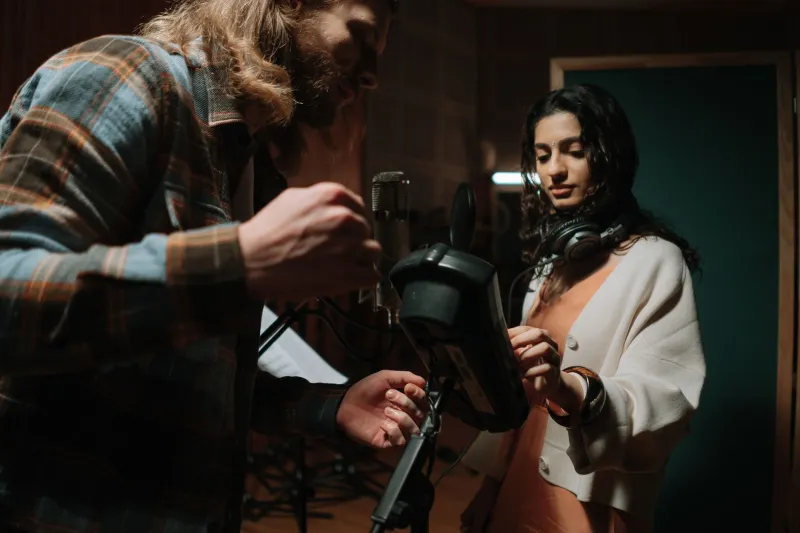
There's a particular kind of excitement that comes with landing a collaboration you've dreamed about for years. Your stomach does that thing. You tell maybe three people before it's official, and even then you can't fully believe it. You've admired this person's work so deeply that their creative choices feel almost like personal memories — you know their rhythms, their references, the way they build tension in a room.
And then you actually get in the room together.
Sometimes it's everything. But a lot of the time? It's something else entirely.
The Pedestal Problem
Here's the thing about putting someone's work on a pedestal for years: you're not really admiring the person. You're admiring the version of them that exists in your imagination — the one filtered through their finished projects, their interviews, their curated public presence. That version is always going to be more polished than the human being who shows up to rehearsal tired, distracted, or just fundamentally different from what you expected.
This isn't cynicism. It's just the reality of how admiration works. When you love someone's art from a distance, you fill in the gaps with your own projections. You assume their process looks like their product. You assume their values mirror the themes in their work. You assume, on some level, that they'll immediately get you — because you've gotten them for so long.
That assumption is where the trouble usually starts.
When Vision Doesn't Translate
I've talked to performers and storytellers who finally landed collaborations with artists they'd followed for a decade — and walked away feeling quietly devastated. Not because anything went dramatically wrong, but because the creative chemistry they'd imagined just wasn't there.
One theater director told me she spent months preparing for a project with a playwright she'd admired since college. She came in with detailed notes, a clear aesthetic vision, a whole emotional framework for the material. He came in wanting to improvise. Neither approach was wrong. But the collision of those two working styles — and the unspoken expectation that they'd be perfectly in sync — made the whole process feel like a negotiation rather than a conversation.
That's the collaboration paradox in its purest form: the closer you are to someone's work, the higher your expectations, and the less room there is for reality to surprise you in a good way.
Why the Fantasy Feels So Real
American creative culture has a way of mythologizing artistic partnerships. We talk about the Lennon-McCartney dynamic, the Scorsese-De Niro streak, the Shonda Rhimes writers' room like they were born fully formed and frictionless. What we don't talk about as much is the tension, the miscommunication, the projects that almost didn't happen because two brilliant people couldn't agree on something basic.
When you've grown up consuming those mythologized partnerships, you naturally start imagining your own dream collaborations through the same lens. You picture the effortless creative flow, the finishing-each-other's-sentences energy, the mutual recognition. And that picture is so vivid, so emotionally loaded, that the actual experience — which is messier and more human — can feel like a letdown even when it's going reasonably well.
Protecting Your Own Voice in the Process
If you do land a dream collaboration, one of the most important things you can do is go in with a clear sense of what you bring to the table — separate from what you admire about them.
It sounds obvious, but a lot of artists walk into these partnerships in a kind of creative deference mode. They soften their instincts. They second-guess ideas they'd normally trust. They edit themselves before anyone else gets the chance to, because they're so aware of the power dynamic in their own head. And then they come out the other side feeling like they didn't fully show up — which, honestly, they didn't.
A few things that help:
Write down your non-negotiables before the first meeting. Not demands, just clarity. What do you need this project to do for your artistic growth? What are you not willing to compromise on? Having that on paper — even if it never leaves your notebook — gives you an anchor when things get murky.
Separate admiration from authority. Loving someone's work doesn't mean they have better judgment than you in every creative situation. They're an expert in their own process. You're an expert in yours. The collaboration only works if both of those things are true simultaneously.
Name the dynamic early. If you're walking in as a fan, say so — briefly, genuinely, and then move on. Get it out of the room. The longer that unspoken fan energy lingers, the more it distorts the professional dynamic.
When It Actually Works
The collaborations that survive the idol-meets-reality gap tend to share one thing: both people came in curious instead of certain. They weren't trying to recreate what they'd each done separately. They were genuinely interested in what the combination could produce — something neither of them could make alone.
That shift in framing changes everything. You stop measuring the experience against the fantasy and start paying attention to what's actually emerging in the room. And sometimes what emerges is stranger, rougher, and more interesting than anything you could have planned.
The best creative partnerships aren't the ones where two people agree on everything from the start. They're the ones where both people are willing to be changed by the process — including by each other.
The Letdown Might Be the Point
If you've had a dream collaboration go sideways, or just go differently than you imagined, it doesn't mean you read the situation wrong. It means you're doing the real work of figuring out what you actually need from creative partnerships — versus what you thought you needed based on someone else's finished art.
That's not a failure. That's information.
The artists who keep growing are the ones who take that information and use it — who learn to walk into high-stakes creative situations with both genuine admiration and a clear-eyed sense of self. Who can hold both things at once without one canceling out the other.
The spell doesn't have to break. But it does have to change. And honestly, what replaces it is usually more interesting anyway.