What Being Second in Line Actually Teaches You About Being First

Photo: Jnzl's Photos, CC BY 2.0, via Wikimedia Commons
There's a particular kind of quiet that comes with being told you're the backup. The person they call if. The name on the list that only gets read aloud when something goes sideways. If you've been there — and honestly, most of us have in one form or another — you know that specific sting.
But here's what I've come to believe after years of watching performers, creatives, and collaborators move through this industry: the understudy mindset might be one of the most underrated tools in your entire career.
Not because settling is noble. It isn't. But because the position itself forces a kind of preparation and presence that the lead role rarely demands in the same way.
The Understudy Has to Know Everything
When you're the lead, you learn your part. When you're the understudy, you learn the whole show.
You study the lead's choices, the director's vision, the rhythm of every scene — not because someone is asking you to go deep, but because you have to be ready to step into a fully-formed world on zero notice. That kind of comprehensive understanding of a project? It's rare. And it's genuinely hard to build any other way.
I've talked to performers who say their understudy stints were the most educational experiences of their careers — more than any acting class, more than any workshop. Because you're watching the machine run in real time, every single night, and you're mentally performing alongside it. You're not just a spectator. You're an active student with skin in the game.
That depth of knowledge doesn't disappear when the gig ends. It travels with you.
Being the Backup Builds a Specific Kind of Toughness
Let's be honest about something: it takes a real kind of mental strength to stay sharp and ready for something that might never happen. That's not a small ask.
Athletes talk about this. The player who sits the bench for two seasons but keeps their head in the game, keeps their body ready, keeps their attitude professional — and then gets called up and delivers when it counts. That's not luck. That's the result of a very specific psychological discipline that most people never develop because they never had to.
In the performing world, it looks like this: you rehearse a role you may never perform publicly. You show up every single day with full commitment to a part that isn't technically yours. You manage the emotional weight of wanting something and not having it — yet — while still doing the work at full capacity.
That's resilience training. And the performers who come out the other side of it are genuinely different. More grounded. More capable of handling uncertainty. More prepared for the reality that this career is full of uncertainty.
The Contingency Project That Changed Everything
It's not just theater. This dynamic shows up everywhere in creative life.
Maybe you pitched a collaboration and landed as the secondary partner — not the lead creative, but the supporting voice. Maybe a project you poured yourself into got shelved, so you started something smaller on the side just to keep moving. Maybe you took a gig that felt like a step sideways because the thing you really wanted wasn't available yet.
Those "plan B" situations have a funny habit of becoming the thing people remember you for.
Some of the most pivotal creative pivots I've seen — and experienced — came from projects that started as contingencies. The side thing that got finished while the main thing stalled. The collaboration that happened because the first-choice partner fell through. The role that opened up because someone else walked away.
The opportunity that wasn't supposed to be yours ends up fitting you better than anything you'd planned.
Why the Understudy Position Is Actually a Strategic Advantage
Here's the reframe worth sitting with: being positioned as the backup means you're already in the room.
You've already been vetted. You already have the relationships. You already know the material. When something shifts — and in this industry, something always shifts — you're not starting from scratch. You're the person who was ready.
That's not a consolation prize. That's positioning.
Directors, producers, and collaborators remember who showed up prepared when it wasn't glamorous. They remember who stayed professional when they had every excuse not to. That reputation compounds over time in ways that are hard to quantify but very easy to feel when the phone rings.
Being great at being second is, counterintuitively, one of the fastest paths to being first.
Holding Both Truths at Once
None of this means you should stop pushing for the lead. Don't misread this as a pitch for playing small or accepting less than you're worth. That's not the point.
The point is that the understudy position — the backup collaboration, the contingency project, the second-choice slot — doesn't have to be a detour from your path. It is your path, just a part of it you didn't plan for.
You can want more and extract everything available from where you are right now. Those two things aren't in conflict. In fact, the performers and creatives who do both tend to move through this industry with a kind of ease that the purely ambition-driven folks never quite find.
They're not white-knuckling every opportunity. They're genuinely engaged with whatever's in front of them — and that energy is visible. Audiences feel it. Collaborators feel it. Casting directors feel it.
The Work You Do When Nobody's Watching
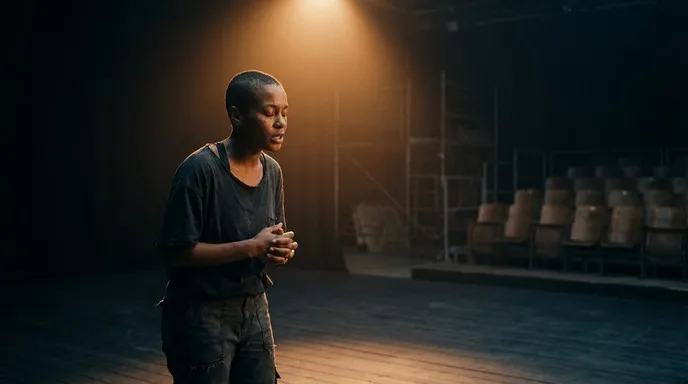
Ultimately, the understudy mindset comes down to one thing: who are you when the spotlight isn't on you?
Because that's where your actual craft gets built. That's where your character as a performer gets forged. The preparation that happens in the wings, in the rehearsal room, in the side project that nobody's paying attention to yet — that's the work that makes you ready when the moment finally arrives.
And it will arrive. It almost always does, for the people who stayed ready.
So if you're sitting in the understudy chair right now — whether that's literally or metaphorically — I'd encourage you to resist the urge to treat it like a waiting room. Treat it like a masterclass. Because that's exactly what it is.