Creating With Your Crew: The Honest Truth About Making Art With People You Love
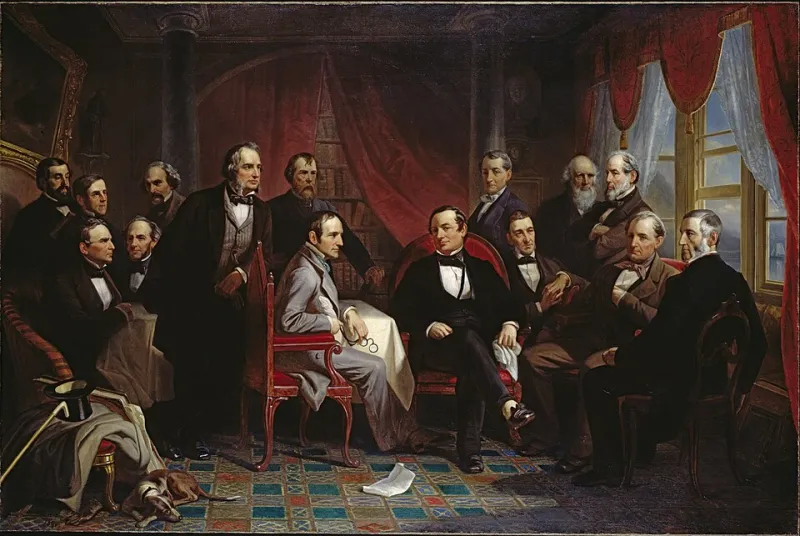
Photo: Christian Schussele, Public domain, via Wikimedia Commons
Let me paint you a picture. You and your closest friend — the one who gets your references, laughs at your jokes, has seen you bomb and still showed up the next night — decide to finally do the thing. You're going to create something together. Maybe it's a show, a short film, a podcast, a live performance piece. Whatever it is, it feels electric. The energy is there. The trust is already built. What could go wrong?
A lot, actually.
And I say that as someone who has been on both sides of this. I've had collaborations with close friends that produced some of the most alive, resonant work I've ever been part of. I've also had ones that quietly fractured something in a friendship that took years to fully repair. The difference wasn't talent. It wasn't even creative vision. It was whether we walked in with any real intentionality about what we were doing — or whether we just assumed the friendship would carry us through.
Spoiler: it won't. Not on its own.
Why Friend Collaborations Feel Different (Because They Are)
Here's the thing about working with people you genuinely care about — the emotional voltage is higher. In a professional collaboration with someone you respect but don't know deeply, feedback is feedback. You can receive a note about your performance or your writing and process it relatively cleanly, maybe a little bruised, but you move forward.
With a friend? That same note can feel like a referendum on your entire creative identity. Suddenly you're not just defending a creative choice — you're wondering if they've always thought this about you. Whether they've been quietly judging your work for years. Whether the friendship itself has been built on a version of you that isn't actually that good.
That spiral is real, and it happens fast.
At the same time, the closeness that makes it harder is also what makes it capable of producing something extraordinary. Friends who genuinely know each other can take bigger swings. They can be more honest. They can hold space for each other's weird ideas long enough to see if they actually work. The depth of the relationship is both the risk and the resource.
The Trap Most People Fall Into
The most common mistake I see — and one I've made myself — is assuming that because the relationship is strong, you can skip the conversations that feel awkward or overly formal. You know, the stuff that sounds like a corporate team-building exercise: who has final say on creative decisions, how you handle disagreements, what happens if one person wants to pull out.
Because talking about that stuff with your buddy feels weird. It feels like you're treating the friendship like a transaction. Like you don't trust them. So you skip it.
And then three months in, you're in a room together and one of you hates the direction the project has taken, and neither of you has any agreed-upon framework for working through it. So instead of having a clean creative conversation, you're having a relationship conversation disguised as a creative one. Or worse — you're having a creative conversation that's secretly a relationship conversation, and neither of you realizes it until something breaks.
The awkward talk upfront? It's not a lack of trust. It's the most respectful thing you can do for both the work and the friendship.
Setting Boundaries That Actually Hold
So what does that conversation actually look like? Here's how I think about it.
Clarify roles before you start. Who is directing? Who has final editorial say? Are these decisions shared, and if so, what happens when you're split? This doesn't have to be rigid or corporate — it just has to exist. Even a casual, "Hey, I think you should have final call on the visual stuff and I'll take the lead on the writing" goes a long way toward preventing a standoff later.
Create a safe word for when it's getting personal. This sounds silly but it works. When a creative disagreement starts bleeding into something that feels like it's about the friendship, you need a signal to pause and recalibrate. Something like, "I think we're in the weeds here — can we take ten?" gives both people an exit ramp before it escalates.
Protect the friendship with designated off-limits time. This one's underrated. Decide together that certain spaces — a regular dinner, a weekly hangout, a group chat — are project-free zones. You need places to just be friends, not collaborators. Without that, the project starts to colonize the entire relationship, and when the project ends or hits a rough patch, you lose the thing that was there before it.
When the Creative Differences Are Real
Here's the harder truth: sometimes you and your friend genuinely have different artistic instincts. Not wrong-versus-right different. Just different. And in a professional collaboration, that tension can actually produce something neither of you would've made alone — the friction creates heat, and heat creates something interesting.
But when you care about each other, that same friction can feel like rejection. Like your friend is saying your instincts are bad. Like you're fundamentally incompatible.
What's helped me is to separate the idea from the person as explicitly as possible. When I'm in a session with someone I'm close to, I try to talk about the work as its own entity — "the piece wants this" or "this scene is asking for something different" rather than "I think you're wrong about this." It's a small linguistic shift, but it moves the conversation from personal to collaborative. You're both serving something outside yourselves, which takes the ego temperature down a few degrees.
Also: learn to love the phrase "let's try it your way first." Not as a concession, but as a genuine experiment. Half the time, seeing an idea executed — even imperfectly — tells you more about whether it works than any amount of arguing about it in theory.
The Payoff Is Real
None of this is meant to talk you out of creating with your friends. Honestly, some of the most meaningful work I've been involved in came from those collaborations — because the trust was real, the shorthand was there, and we both cared about something bigger than our individual egos.
But that outcome doesn't happen by accident. It happens because someone in the room was willing to have the slightly uncomfortable conversation before things got messy. It happens because both people respected the friendship enough to treat the collaboration seriously — not casually, not like it would just work itself out.
The best creative partnerships — the ones built on genuine closeness — require more intentionality, not less. The friendship gives you the raw material. The intentionality is what shapes it into something that lasts.
So yeah, work with your people. Just go in with your eyes open.