The Show That Fell Apart Taught Me More Than Any Standing Ovation
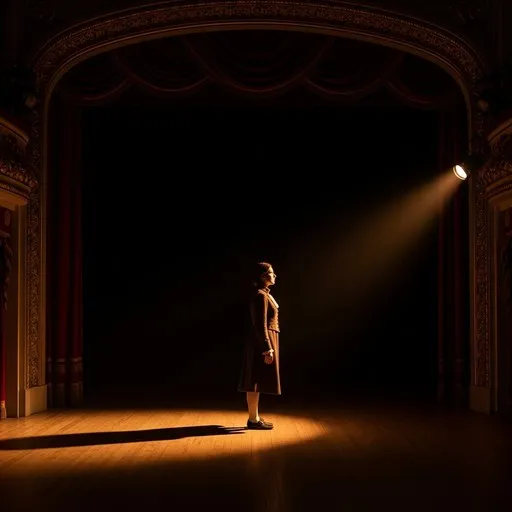
Photo: performer alone on empty stage in dim spotlight introspective, via images.stockcake.com
I still cringe when I think about it.
It was a Thursday night show — mid-sized venue, decent crowd, the kind of night that should have been routine. I had done this material dozens of times. I knew it cold. And then, somewhere around the fifteen-minute mark, something just... collapsed. Not dramatically. Not in a way anyone could put their finger on. The energy drained out of the room like air from a slow leak, and I could feel every single person in that audience start to mentally check out.
I finished the set. I walked off. I sat in my car for a long time before I could drive home.
For weeks, I filed that night away under don't think about that. But eventually, I made myself go back and look at it — really look at it — and what I found changed how I perform to this day.
Why We Bury the Bad Ones
Highlight-reel culture has a lot to answer for. When our entire professional presence lives on social media, there's enormous pressure to curate only the wins — the standing ovations, the sold-out shows, the glowing reviews. We train ourselves to perform success even when success isn't what's actually happening.
The problem is that this habit doesn't stay on Instagram. It bleeds into how we process our own experiences. We start avoiding the bad nights not just publicly but privately, in our own heads. And when we stop examining our failures, we stop learning from them.
Every working artist I've ever admired has a version of the same story: the show that bombed, the project that tanked, the performance that still makes them wince years later. The ones who grew from it didn't just survive the embarrassment — they got curious about it.
Failure as Research
Here's the reframe that matters most: a bad performance isn't a verdict. It's data.
When a set falls apart or a story lands wrong or the audience never quite connects with what you're doing, that's information. Real, specific, useful information that you can't get any other way. The question isn't why did I fail — that framing leads you straight to shame and defensiveness. The better question is what was actually happening in that room.
Was the material genuinely not working, or was it the wrong material for that specific audience? Was your energy off because of something happening in your life that you brought onstage without realizing it? Was there a structural problem with the piece — a pacing issue, a tonal inconsistency, a moment that needed more setup than you gave it?
These aren't comfortable questions, but they're productive ones. And the answers are almost never you're just not good enough. They're almost always something specific, something fixable, something that points toward a real creative adjustment.
Real Pivots That Started With Disaster
Career-changing moments come from unexpected places. There's a reason so many artists look back at their most painful professional experiences and describe them as turning points rather than low points.
A songwriter I know spent years writing polished, radio-friendly pop. Then she had a show where everything went wrong — the sound system was terrible, she forgot lyrics, the crowd was indifferent. In her embarrassment afterward, she stripped everything back and wrote a raw, unproduced song about that exact feeling of falling apart in public. It became the most personal thing she'd ever released. It also became the work that finally found her real audience.
The disaster cracked something open. It forced her out of the version of herself she'd been performing and into something more true.
That's not an unusual story. It's actually a pretty common one, once you start paying attention.
How to Actually Learn From a Bad Night
Giving yourself a structured way to process failure makes a real difference. Here's what works:
Wait before you analyze. The night of — or even the day after — you're too close to it. Let the sting settle before you try to extract anything useful. Coming back to it a week later with some distance is almost always more productive.
Write it down. Not to punish yourself, but to externalize it. Describe what happened as factually as you can. What was the room like? When did you feel the shift? What were you thinking in the moments things went sideways? Getting it out of your head and onto paper changes your relationship to it.
Look for the specific moment, not the general feeling. The whole thing was a disaster is not useful information. The story lost the room right after I introduced the second character — that's something you can actually work with.
Ask someone you trust. Not for validation, but for honest observation. A director, a collaborator, a creative friend who was in the room. What did they notice? What you experience from the inside of a performance is often dramatically different from what reads on the outside.
Give the material or the approach a second chance. Sometimes one bad night is just one bad night — wrong room, wrong timing, wrong energy. Don't throw away good work because of a single difficult performance.
The Embarrassing Stuff Knows Something
Here's what I've come to believe after years of doing this: the performances you're most embarrassed about are usually the ones where something real was exposed. The mask slipped. The craft wasn't enough to cover something that needed more honesty, more vulnerability, more genuine risk.
That exposure feels awful in the moment. But it's also pointing directly at the next level of your work.
The show that fell apart on that Thursday night? When I finally got honest about why it fell apart, I realized I had been coasting. I had gotten comfortable with a version of my performance that was technically competent but emotionally safe. The audience felt it before I did.
So I went back to the material. I made it harder. I made it more honest. I stopped protecting myself from the parts that actually scared me.
The next time I did that show, it was the best I'd ever done it.
The bomb taught me that. The standing ovation never would have.