Why Some of the Most Respected Artists You Know Walked Away From Their Viral Moment
Imagine you've made something. It's punchy, it's digestible, it hits a trending topic at exactly the right moment. You can feel the potential energy of it — the kind of content that gets screenshotted and reshared and quote-tweeted into a news cycle. A publicist would call it a gift.
Now imagine deliberately choosing not to post it.
For most people, that sounds like creative self-sabotage. But for a specific type of artist — the kind whose career tends to age really well — it sounds like discipline.
The Algorithm Isn't Neutral
Here's something worth naming clearly: the platforms we use to share work aren't passive distribution tools. They actively shape what gets made by rewarding certain formats, certain lengths, certain emotional registers. Content that triggers quick, strong reactions — outrage, shock, sentimentality, novelty — performs better than content that requires time, context, or repeated engagement to fully appreciate.
That's not a conspiracy. It's just how engagement metrics work. But it creates a slow drift that's genuinely dangerous for creative professionals. When your livelihood starts to feel connected to your share count, the gravitational pull toward trend-chasing becomes almost physical.
The artists who resist that pull aren't just being contrarian. They're protecting something.
The Long Game in Practice
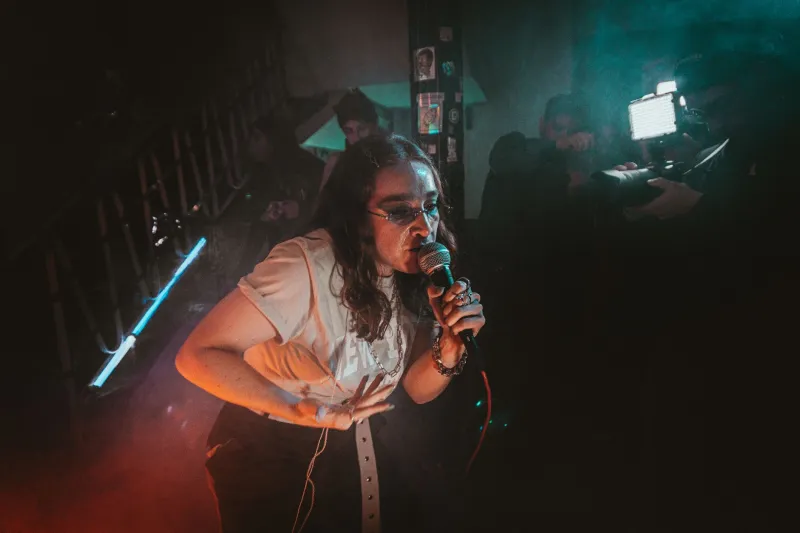
Consider the pattern of musicians who spent years building catalog before most people knew their names. Phoebe Bridgers spent a long time writing deeply specific, emotionally complicated songs that weren't particularly easy to market before she became one of the most critically respected voices in indie folk. The songs didn't simplify to meet the moment — the audience eventually grew to meet the songs.
Or look at filmmakers like Kelly Reichardt, whose work operates at a pace and emotional frequency that is essentially the opposite of viral. Her films don't trend. They accumulate — slowly, steadily — into a body of work that commands serious critical attention precisely because they never chased easy approval.
These aren't accidents. They're the result of a consistent, intentional choice: depth over distribution.
What You Actually Give Up
Let's not romanticize this too hard. Choosing the slow path has real costs, and pretending otherwise does a disservice to anyone genuinely weighing the decision.
You give up momentum. The virality window is real — there are moments when a single piece of content could introduce your work to tens of thousands of new people overnight, and walking away from that means starting tomorrow at roughly the same place you started today.
You give up validation. And if you're a creative person, you know how much that validation can feel like oxygen. The likes, the shares, the flood of new followers — there's a physiological component to that feedback that's hard to dismiss.
You also sometimes give up income. Trending content converts. It drives streaming numbers, ticket sales, brand partnership inquiries. The algorithm-friendly version of your work often makes more money in the short term than the complex, patient version does.
Knowing all that and still choosing depth? That's a decision you have to make with your eyes open.
The Credibility Compound Effect
Here's what the slow-burn artists tend to accumulate that their viral-chasing counterparts don't: trust.
Audiences who found you through a trending moment have a relationship with that moment. They may or may not have a relationship with you. But audiences who found you through years of consistent, uncompromising work — who came because someone they respect recommended your back catalog, or because they stumbled across something you made three years ago that hit them differently than anything trending — those people are in a different category entirely.
They're not following a moment. They're following a body of work. And bodies of work compound in ways that single viral moments simply don't.
A song that gets two million plays in a week and then disappears from the cultural conversation has a shorter shelf life than a song that gets discovered and rediscovered by the right listeners over a decade. The numbers look different. The impact is actually bigger.
The Question Worth Sitting With
If you're a creative professional navigating this tension right now — and if you're honest with yourself, you probably are — the real question isn't whether viral exposure is good or bad. It's more specific than that.
It's: what kind of attention do I actually want, and what kind of work does that require me to make?
Because those two things are connected in ways that aren't always comfortable to acknowledge. The work that commands deep, lasting respect is often the work that requires patience — from the person making it and from the audience receiving it. That patience is increasingly rare, which means the artists willing to practice it are increasingly valuable.
The artists who walked away from their viral moment didn't do it because they were above the internet. They did it because they were playing a longer game than the algorithm knows how to measure.
And that game, it turns out, has a much better ending.