Nobody's Asking for It Yet — Do It Anyway: The Long Game of Unconventional Work
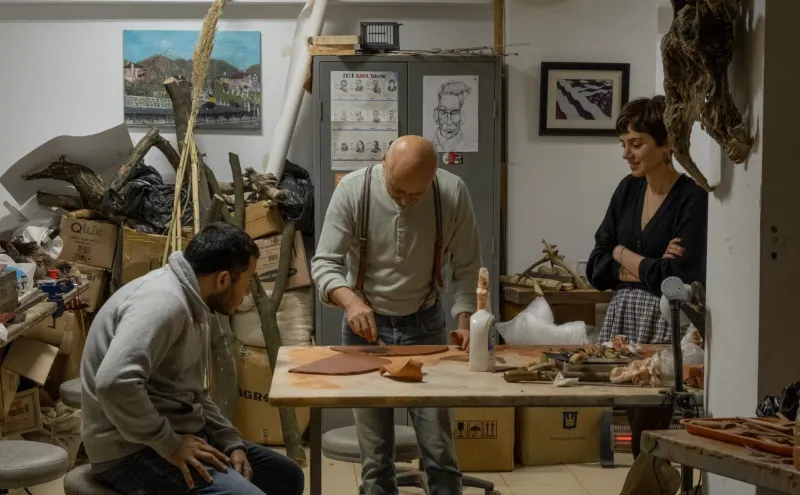
There's a specific kind of creative loneliness that doesn't get talked about enough: the loneliness of being three years into a project that nobody's asked for yet.
Not a failed project. Not a bad idea. Just one that's ahead of its moment, or adjacent to the mainstream conversation, or simply too specific and strange to find its people quickly. You know it's good. You feel it in the work. But the feedback is slow, the validation is thin, and every week you stay with it is another week you're choosing it over something more immediately rewarding.
This is where most people quit. And this is exactly where the most interesting work gets made.
The Instant-Results Myth
American creative culture has a complicated relationship with patience. We celebrate overnight successes even when we know they took ten years. We talk about "blowing up" as if it's a thing that just happens to people rather than a thing that happens after years of unglamorous, unwitnessed work.
The result is a creative ecosystem where a lot of people abandon genuinely promising work because it didn't find traction in the first six months. They look at the engagement numbers, compare them to someone else's trajectory, and decide the project doesn't have legs.
But here's what those numbers don't show: the artists who eventually built the most loyal, devoted audiences — the ones whose work became genuinely synonymous with something real — almost never got there fast. They got there committed. They stayed with something long enough for it to become fully itself, and long enough for the right people to find it.
Fast validation and deep resonance are not the same thing. And chasing one usually costs you the other.
What Three Years Actually Does to a Project
I want to use a specific timeframe here because I think it's honest and useful. Three years is long enough to be meaningful but short enough to be actionable. It's not "keep going forever" — it's a real commitment with a real shape.
In year one, you're figuring out what the thing actually is. Most of what you make will be the work of someone learning the project from the inside. You'll produce some pieces that feel close to what you're going for and a lot of pieces that feel like approximations. That's normal. That's necessary. The project is teaching you how to make it.
In year two, something shifts. You start to have opinions about the work that are specific rather than general. You know what belongs in it and what doesn't. You can feel the difference between a good version and a great version, and you're making more of the latter. The work is developing a texture, a point of view, a voice that's distinctly its own.
By year three, if you've stayed honest and kept pushing, the project starts to have a gravity of its own. It attracts the right collaborators. It finds its early devotees — the people who don't just like it but need it, who feel like it was made for them specifically. Those people tell other people. The work starts doing some of the work of finding its audience.
None of this happens if you quit at month six because the numbers weren't there.
The Loyalty That Slow Discovery Creates
Here's something worth understanding about audiences who find work slowly: they're different from audiences who find work in a viral moment.
When something blows up overnight, the audience it attracts is wide and shallow. A lot of those people are there because the thing is the thing right now, not because it genuinely speaks to them. They'll be gone when the next thing arrives. That's not a judgment on them — it's just the nature of discovery driven by momentum rather than resonance.
But the person who finds your work in year two of a project that nobody's promoting, who digs through the archive and shares it with their three best friends because it's the most specific, strange, true thing they've encountered in years — that person is yours. They're not a fan in the casual sense. They're an evangelist. They will bring you the next ten people who feel exactly the same way.
That kind of audience doesn't scale as fast. But it endures in a way that viral audiences almost never do. And when you eventually do have a larger moment, those early devotees are the foundation that makes everything else feel real rather than accidental.
Staying the Course When the Feedback Is Thin
The practical challenge of long-form commitment is that the absence of feedback starts to feel like evidence. Silence starts to sound like "this isn't working" even when what it actually means is "this hasn't found its people yet."
A few things that help:
Separate process metrics from outcome metrics. You can't always control whether the work is finding its audience yet, but you can track whether the work itself is getting better. Is each piece more specific than the last? Are you making choices you wouldn't have made a year ago? Is the project becoming more fully itself? Those are the metrics that actually matter during the long build.
Find one or two people who get it early. Not a wide audience — just one or two people whose taste you respect who genuinely understand what you're making and why. Their engagement isn't validation in the shallow sense; it's confirmation that the thing is real and communicable. That's enough to keep going.
Let the project change you. The artists who stay with unconventional work for years don't stay with it unchanged. The project teaches them things. Their craft deepens. Their perspective sharpens. The commitment isn't just about finishing the thing — it's about who you become in the process of making it. That becoming is part of the work.
The Signature Work Almost Always Comes Late
Look at the careers of artists you genuinely admire — not the ones who had a hit, but the ones whose work you'd call essential. The ones who made something that felt like it couldn't have been made by anyone else.
Almost universally, that signature work came after years of making things that were good but not yet fully themselves. It came after the false starts and the abandoned projects and the work that was technically fine but hadn't found its center yet. It came because they stayed.
Your most important work is probably not the thing you're best known for right now. It might be the thing you're three months into that nobody's asking about yet. It might be the project you keep coming back to even though it doesn't fit neatly into your current brand. It might be the weird, specific, hard-to-explain thing that you know is real even when you can't prove it to anyone else.
Commit to it anyway. Give it the years it needs. Let it become fully itself.
The audience is out there. They just haven't found you yet — and they will, if you're still there when they arrive.