Keep Your Sketchbook Ugly: Why the Mess Behind the Curtain Is Sacred
Let me tell you something that took me an embarrassingly long time to figure out: the moment you start performing for yourself in your own private creative space, you're done. Not done as in finished — done as in stuck. Calcified. Performing the role of an artist instead of actually being one.
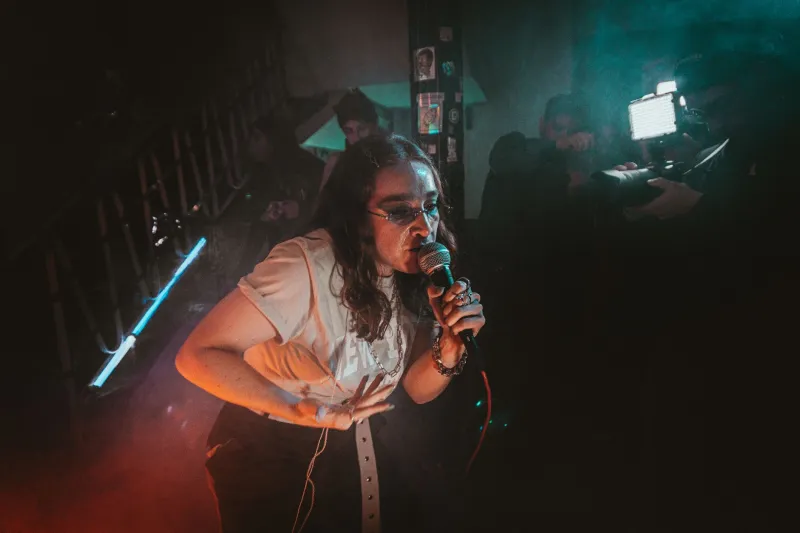
There's a version of your work that lives on stage, on screen, in the feed. That version is edited, considered, shaped for an audience. And that's fine. That version has a job to do.
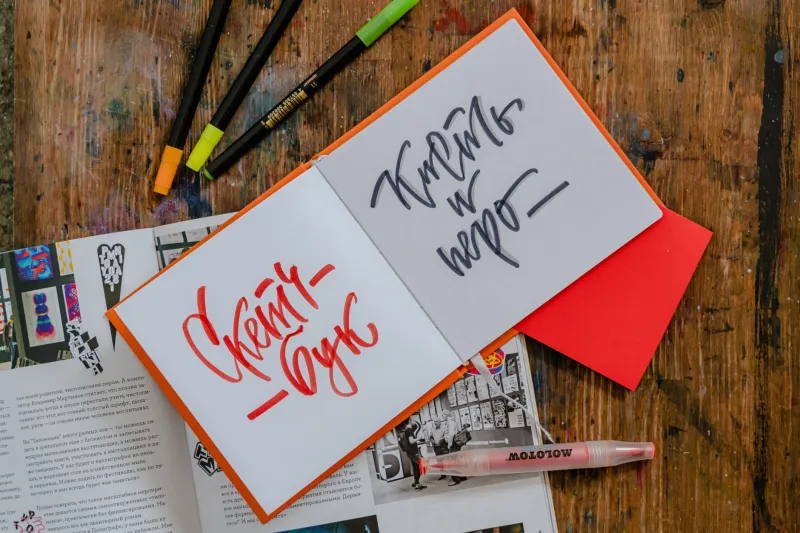
But there's another version — the one that lives in the notebook, the voice memo at 2 a.m., the scribbled napkin, the terrible first draft that you'd be mortified for anyone to read. That version? It doesn't have a job. It has a life. And the second you start cleaning it up before it's ready, you kill it.
The Pressure to Polish Is Coming From Inside the House
Here's what's wild about the current creative landscape: the pressure to present a curated process has gotten so intense that artists are now performing the act of creating before they've actually created anything. Behind-the-scenes content, process reels, "watch me make this" videos — all of it is real and valuable in its own right. But it changes something fundamental when your sketchbook is a prop.
I'm not throwing shade at transparency. Showing your process can be powerful storytelling. But there's a difference between sharing your process and performing your process. One of those things feeds your audience. The other one quietly starves you.
When you know someone might be watching — even hypothetically, even just your future self editing the highlight reel — you make safer choices. You reach for the idea that sounds smart instead of the one that feels true. You skip the weird detour because it's hard to explain. You don't write the thing that scares you because what if someone sees it before it's ready?
And just like that, your private creative space stops being private. It stops being safe. And the wild, unruly, genuinely original stuff stops showing up.
What Lives in the Mess
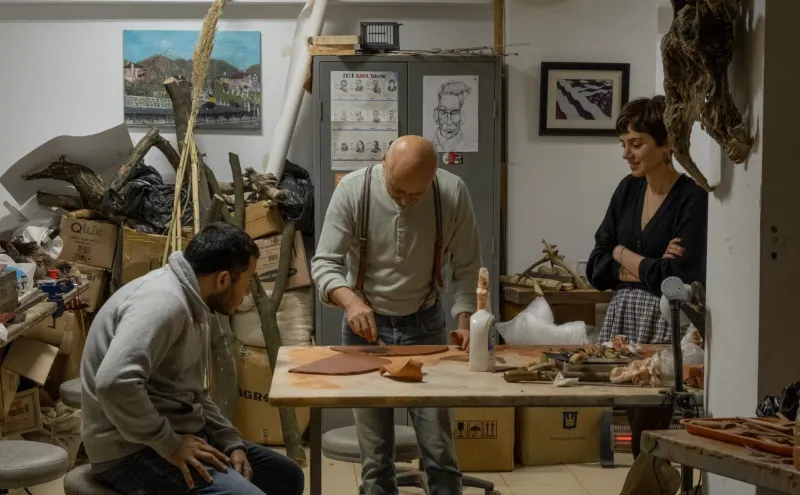
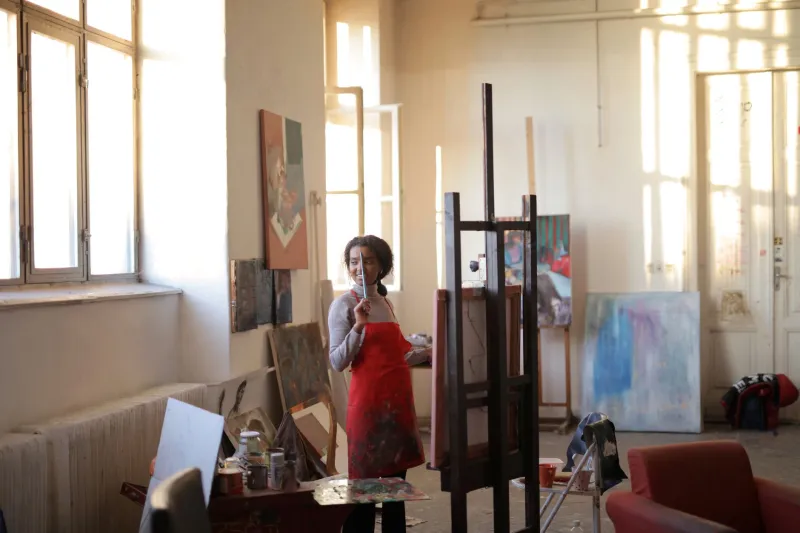
Every artist I respect has some version of a space that's completely off-limits. Not because they're precious about it, but because they've learned — usually the hard way — that some ideas need darkness to germinate.
Think about how a seed works. You don't dig it up every three days to check on it. You don't post a photo of it and ask your followers if it looks like it's growing right. You put it in the ground, you water it, and you leave it alone. The interference is what kills it.
Your weirdest ideas are the same way. The half-baked concept that you can't quite articulate yet. The story thread that doesn't make sense in the context of anything you've done before. The character voice that sounds nothing like your established style. Those things need room to be wrong for a while before they become right.
The artists who consistently produce work that surprises people — that feels genuinely fresh instead of just technically proficient — are almost always the ones who have protected some corner of their practice from external feedback. They have a place where nothing is precious, nothing is final, and nothing has to make sense to anyone else yet.
The Perfectionism Trap Disguised as Standards
Here's where it gets sneaky: a lot of premature polishing doesn't feel like insecurity. It feels like professionalism. It feels like having standards.
You clean up the draft because you want to get it right. You revise before you've even finished the first pass because you can already see the problems. You abandon the idea before it has a chance to develop because it's clearly not working yet.
But "not working yet" and "not working" are completely different things, and perfectionism loves to blur that line.
The rough, unfinished, still-figuring-itself-out version of an idea is not a failed version. It's a developing version. And the only way to find out if it has legs is to let it run around a little before you put it in a cage and call it a finished piece.
Some of the most resonant work — the stuff that audiences feel in their chest, the performance that makes a room go quiet — started as something that looked like nothing. A weird impulse. A half-sentence. A feeling with no form yet.
Protecting the Private Space
So how do you actually do this? How do you maintain a genuinely unfiltered creative practice in a world that's constantly asking you to share?
First, make the distinction physical if you can. A notebook that never gets photographed. A folder on your computer that isn't backed up to anything shareable. A rehearsal ritual that happens before the official rehearsal — just you and the work, no witnesses. The physical boundary creates a psychological one.
Second, give yourself explicit permission to be bad in that space. Not "okay with imperfection" bad — actually, deliberately, gloriously bad. Write the terrible version on purpose. Make the choice that you know won't work just to see why it won't work. The act of deliberately making bad choices teaches you more about your craft than cautiously making safe ones ever will.
Third — and this is the one that's hardest — stop narrating your own process to yourself in real time. The internal critic that's already writing the caption for the work-in-progress photo? Fire that person. They don't work in the sketchbook. They work on the stage, where that kind of awareness is actually useful.
The Stage Is for the Audience. The Notebook Is for You.
At the end of the day, the work that lands — the performance that sticks with people, the story that keeps getting shared — almost always has something alive in it. Something that feels like it came from a real place rather than a calculated one.
That alive quality? It gets born in the mess. In the ugly first draft and the abandoned attempt and the weird idea you weren't sure about. You can't manufacture it on stage. You can only protect the conditions that allow it to exist behind the curtain.
So keep your sketchbook ugly. Let your private practice be the one place where nothing has to be ready, nothing has to be good, and nobody — not even your future self with an audience to impress — gets to come in and start cleaning up.
The stage will get its version. But the notebook is yours.